ABOUT THE AUTHOR

Know more about Subhrashis.

JOURNEY OF SURVIVORS

Know about the unknown history of India. Click to Purchase.

5 QUESTIONS OF THE INQUISITIVE APES

Want to unveil the mystries of the universe? Want to know yourself? Want to be happy? Click to buy.

FOLLOW ON FB

Catch the latest posts.

FOLLOW ON INSTA

Keep up to date with the latest pictures.

WHATSAPP CONNECT

Talk to Author directly

Welcome to KHOJ: The search to know our roots and understand the meaning of our existence.

Prejudice is the biggest problem in the society. It can be it in terms of religion, cast, sex, skin-colour, status etc. Prejudice can also be in form of the feeling that human beings are the greatest creation, or even patriotism about artificially created borders. The motto of KHOJ is to gain knowledge and break that prejudice. But there is a word of caution for the readers. To break the prejudice KHOJ might throw upon you the concepts it believes in. If the reader believes on KHOJ’s perception without question, then KHOJ itself might incept a prejudice in the readers mind thus failing in it own motto. KHOJ is trying to break its own world of prejudice, but at times that prejudice might get reflected in its writing. Please do challenge them.
Showing posts with label geology. Show all posts

Tuesday, August 2, 2016

CONSILIENCE: Geology, History, Cultures and Evolution


REF http://www.channelnomics.com

Some people have asked me that, being a geologist, how did I end up writing a book on history? To me, geology is an extension of history and the two subjects are more inter-related than we think. 

Geology deals with two different aspects: the living and the non-living. The rocks, mountains, minerals, plate-tectonics, etc, are the non-living part of geology that closely relate to geography. The living aspect, ironically, deals with the dead. Fossils and evolution to be precise. It is closely related to biology.

It is history that connects the two extreme aspects of geology. How? The short answer is: Geology influence history, history influence culture, and culture influence evolution. Let me explain.

Rifting in Africa is considered by many as the reason for the evolution of Homo sapiens. Plate tectonics created mountains that acted as barriers and thus natural boundaries of human civilisations. The rivers that came down from the mountains created fertile plains that became the nucleus for the growth of civilisations.  Indian civilisation would not have been born without the fertile plain created by the rivers that exist because of the Himalayas. The melting of glaciers had a profound effect in starting the agricultural revolution. The long east-west axis of Eurasian plate, a result of plate tectonics, was the reason for the rapid growth of civilisation in the fertile crescent (read J. Diamond’s Guns Germs and Steel). The mineral deposits, coals and petroleum has influenced the geopolitics of the world. The mountains and passes have influenced the outcome of many battles. Geology, thus, played a big role in guiding the path human history took.

History’s influence on culture is more easily understood. Arts, languages, religions, nationalism and politics are outcomes of history that define cultures. Culture is unique to human beings if you define it, in a less minimalist way, as a complex social organisation where people learn shared way of life transmitted through symbolic forms of communication, like language. Unlike animals, culture binds a large group of people together through an idea that does not exist in reality.  Languages are random vibrations whose pattern we associate with a certain meaning. The sounds are abstract as it does not have any real universal meaning. It’s meaning only exist in our mind once we are trained to do so. Language, however, creates bonds between a large group of people that defines a culture. Same is true for religion. It is an abstract concept that binds people together. It is a myth that exists only in our mind (read Sapiens by Y.N. Harari). It helps create an identity, a sense of unity, which has historically helped tribes to survive. Nationalism is also same as religion. Instead of an imaginary faith we now have imaginary borders that only exists in the human mind. Politics is no different. The leaders who create history, most often than not, are people who were able to incept any such mythical ideas in the minds of a large group of individuals. Individuals who were ready to fight and die for that idea. Ideas that resulted in numerous battles and bloodshed, ideas that annihilated Hiroshima and Nagasaki, ideas that now breed terrorism. We can say with some confidence that history and culture are intricately interlinked.

The link between culture and evolution is a bit more complex. Human beings accumulate ideas and technologies over generations and the culture evolves. Inventions like fire, or stone tools gave few groups of individuals advantage of survival. The groups that did not learn the new inventions perished, while the genes of those that survived dominated. Control of fire gave us the ability to cook food that became easier to digest. As a consequence our stomach, teeth and mouth became smaller and the intestine shortened. That might have helped us focus more energy towards the brain. There was a time when humans could not digest cow milk. Once we started domesticating cows our digestive system evolved in a way that it became easier to digest milk, or milk products. Cow milk became an easy source of protein and fat that gave the animal herders better chance of survival compared to hunters and gatherers. Thus, culture guides our evolution and decides which genes will spread.

Genes, in turn, control our behaviour, and thus culture. When I started having thyroid problems I noticed that I lost my temper very easily. I became a different person. It made me realise that a lot of what we are depends on the hormones that flow in our body. Those hormones, in turn, depend on our brain and thus our genes. How brains affect behaviour is well documented by the case of Phineas P. Gage (read Consilience by Edward O. Wilson). In 1848, Gage suffered a major accident in which he lost a part of his brain. The loss of that particular part of the brain, prefrontal lobe to be exact, turned a cheerful well-mannered gentleman into a self-destructive habitual liar. Similar cases have been observed with other people who lost that part of the brain. Prefrontal lobe, we now know, controls our emotions. When we judge people we often forget that most of the time they cannot help. Our culture, guided by our behaviour, is the result of our biochemistry.

That would mean something very interesting.  The type of behaviour that would dominate the human race in the future would be guided by the genes that would spread. The genes that would spread would be the ones that control particular physical or behavioural traits in individuals that are preferred by the dominant culture at a particular time. These traits could be entirely imaginary bias/prejudice, like skin colour. Development of such prejudice is governed by historical events. An example would make things clear.

History of colonial rule can create a racist mindset that makes individuals prefer white skin. If the people in power, who had a better chance of survival, had white skin then a society like India can develop a preference towards that skin colour. In such a biassed society people having darker complexion would have less chance of getting married and thus spreading their genes. If the biassed culture continues long enough, soon that society would start getting fairer. For natural selection to be effective a cultural preference should persist for a long time. Thus, a historical event can create a biassed culture that, by the process of natural selection, directs the line of evolution. Lest we forget, the British colonised India because it had enough wealth that could make them rich. That wealth was a product of India's fertility and natural resource governed by the geology of India.

We tend to think of geology, history, biology, sociology, anthropology, genetics etc as entirely different subjects. When we think about it, these subjects are very much related. Being a geologist, it was only natural for me to get attracted to history. My current interest is in Dual inheritance theory (DIT), also known as gene–culture coevolution. And geology has a role to play there too.

Wednesday, May 25, 2016

Candy Balls....Or are they?

In the middle of a hot desert, few hungry gold miners stumbled upon some naturally growing candies. When they licked it they tasted sweet. The miners started eating the sweet candy-like things until they felt nauseated. Soon, to their horror, they realised what they just ate.

This story of gold miners is from mid-19th century Nevada.

Those sweet candy-like things were actually packrat middens!


Now let me explain what that means.

Packrats are large rodents that constructs ball-shaped debris piles called middens. Middens are used to built their den. They consists of plant fragments, small rocks, dungs, bones, food remains and their own feces.

But why sweet candies?

This is the interesting part. The naughty rodents urinate on their own den. The sugars, along with other things, crystallize from the urine on the top of the middens, making it sweet. The hard sugar coating also helps in binding the middens and preserve the materials inside.

Midden is derived from the word 'mess'. They did mess with the poor gold miners. Packrat poop and urine for dinner! Yummy!


The middens are actually important pieces of mess. Under right (dry) conditions they can can be preserved for ~50,000 years. Geologists, palaeontologists to be precise, love them. They are like libraries that preserve the climate information, flora and fauna of the past. Important shit these.


REF#
1] Collapse by Jared Diamond, Penguin India, 2011
2] Wiki

Monday, March 7, 2016

History of Indian Geology

Geologists, a study found, are the happiest students in campus. Being the only species that can survive just on fermented products, it is not a surprise. There are two thing geologists are fascinated about - rocks and on-the-rocks. Indian geologists, however, have not received the fame their western counterparts enjoy. You don't see Bollywood movies where geologists save people from deadly volcanoes or earthquakes. Indians have been exploiting the vast mineral resources of India for thousands of years. Books have been written describing the locations and identification criteria of precious stones and metals. But, geology as a subject, was brought to India by the Englishmen who wanted to find all hidden resources in the new land that they now governed. East India Company started mineral exploration in India from 1774.

The early geological observations was made in India not by a geologist, but by a zoologist named Francis Buchanan. He surveyed Mysore in 1800 and Bengal between 1807 and 1814. It was Francis who started the Alipore zoo in Kolkata. He noted down in details all the rocks he saw, even those which were used to make temples. He penned his observations in his book ‘Journey from Madras through the countries of Mysore, Canara, Malabar’. Again, it was a statistician named W.H. Sykes who recognised and coined the term ‘Deccan Trap’ in 1833. ‘Deccan’ comes from ‘Dakshin’ meaning south, and ‘trap’ from the Swedish word ‘trappa’ meaning stairs or terraces. These continental flood basalts formed at the end of Cretaceous Period triggered by the India-Seychelles break-up. Some blame the dangerous Deccan volcanism for the extinction of the dinosaurs. Bones of dinosaur was recovered from beneath the traps in Jabalpur by Sleeman. The bones of the Titanosaurus indicas was sent to Kolkata. The bones were confirmed to be that of dinosaur only in 1877. Decades later the dinosaur was gone. The Titanosaurus was rediscovered in 2013. It shy dinosaur was hiding inside a cupboard in Kolkata's Geological Survey of India.

The Doom of Dianosaurs

While the first geological map in the world was made way back in 1743, India had Her first geological map only in 1821. The map was that of Hyderabad, made by Dr. H W Voysey, often called as the father of Indian geology. In fact, geology as a science was taken up for the first time by Asiatic Society of Calcutta in 1808. The 27 year old geologist, H W Voysey, was sent to Calcutta as Surgeon of Trigonometric Survey. Trigonometric survey of entire India was started by William Lambton in 1806. George Everest assisted Lambton, and later succeed him. Appointment of a geologist in Trigonometric survey puzzled Voysey’s colleagues. Hastings had to clarify the need of a geologist in India. A geologist was necessary to understand the density of the  different rocks in the subsurface that deflected the plumb line while taking trigonometric measurements. Apart from gravity, there were magnetic anomalies that affected the surveys as well. One eccentric Dr. Robert Tytler died while trying to hunt down the magnetic pole near one such anomalous ferruginous hill in Gwalior. Voysey came to India to simply help in understanding the anomalies, in which he was not very successful. His mapping did help in understanding the geology of India. However, understanding geology was not why the government paid him. Despite objections from George Everest, Voysey’s salary was cut due to long absence from regimental duties, and he resigned from the post. Soon after, he died of malaria at a young age of 33 years while travelling to Kolkata (Calcutta).

The year before Voysey’s death, in 1823, local Indians presented Captain S Webb with ‘bijli ki har’ - the bones of lightening. These Himalayan fossils were used by local as charms, or by native doctors as medicines. Webb knew that the British would be able to make a better scientific interpretation of these fossils. He send them to The Royal College of Surgeons of England. The fossils were interpreted as an evidence of the great flood. More surveys were undertaken to find the animals that perished in the flood. Attempt was also made to relate the fossil finds to ancient Indian texts. When a giant fossil of turtle was discovered, some wondered if it was the Kumra (tortoise) Avatar of Vishnu. More vertebrate fossils were discovered from what is now known as the Siwalik Group. The name is taken from the Siwalik Hills. Siwalik literally translates to the ‘tresses of Lord Shiva’. Siwalik group are molasses deposits formed by erosion of sediments from the rising Himalayas. They are around 5000m thick and cover the entire Indo-gangetic plain. The dead animals of Siwalik provided the fundamentals in understanding the Mio-Pliestocene epoch. They unfortunately said nothing about the great flood, nor was the fossil of Matsa (Fish) Avatar ever recovered!

The real need of geologists in India came from the coal industry that fuelled the Industrial Revolution in Britain. Raniganj Coalfield was the first field to be commercially mined in India. It was discovered in 1774 by John Sumner and Suetonius Heatly of the British East India Company. A new coalfield was discovered in Angul, Odisha in 1837. It was the Talchir coalfield, and it would bring a new puzzle for the geologists, to which we will come back later. Mining was mostly haphazard until the Coal Committee of India was formed in 1836. Geologist D. H. Williams was called from Britain to do a survey of Ranijanj, Jharia and Karanpura coal fields. He was appointed the Geological surveyor in 1846. Unfortunately, he fell from his elephant and died of ‘jungle fever’ in 1848. Three years later Geological Survey of India (GSI) was officially formed.

Establishment of GSI attracted more European geologist to India. The Irish Medlicott brothers made immense contribution towards Indian geology. They worked mostly around central India. While elder brother Joseph found the important Narmada-Son lineament, younger brother Henry worked the Vindhyas in detail. Proterozoic Vindhyan formation contains one of the oldest known life form on earth. Henry laid the foundation of Himalayan geology and is also credited for coining the term ‘Gondwana’ in 1872. ‘Gondwana’ means the ‘land of Gonds’. ‘Gond’ was probably first used by the Afghan traders for the Khond (hill) tribes in the 11th century. The rock Khondalite (Garnet-Sillimanite-Schist) also takes its name from the same tribe. It was the coals of Permian formations of Gondwana that attracted the geologists. Glossopteris was the key fossils of the Gondwana coals. Joseph identified the Lameta Formation and sub-divided the coals into Talcher, Damuda and Mahadevas in 1860. Joseph also noted the difference of these rocks from those of Vindhyans. The latter was only found north of the Narmada-Son lineament. However, it was not the Medlicott brothers, but Blanford brothers who found the big puzzle.
While studying the coal beds in mid 1950’s the Blanford brothers found huge boulders that could not have been carried by anything other than glaciers. On noticing closely, these boulders had stripes that confirmed them as glacial deposits, something unexpected in these part of the world. Similar boulders were soon found all across India. Mr Oldham correlated them with similar beds seen in Australia. One way of explaining the puzzle was ice-age, a time when glaciers covered most of the earth. As earth warmed up, the ice melted leaving behind the glacial deposits. Forests took over that formed the Permian coal beds.

Before the glacial puzzle was solved another came up further north, on the foothills of Himalayas. It was the old puzzle of gravity anomaly that Voysey was not able to solve. Some errors in positioning were noted by the surveyors while doing trigonometric survey south of the Himalayas. The position from Trigonometric survey done by astronomical measurement did not match the one done by triangulation. The extra gravitational pull from the Himalayas were thought to be the reason for the anomaly by Mr. Everest. To get a better hold of the measurement a mathematician, the Archdeacon of Calcutta, was recruited.

John Pratt was a brilliant mathematician. He became the chaplain of the East India Company in 1838. In 1850 Pratt became the Archdeacon of Calcutta. While studying the anomalies he found that the results were counter-intutive. The mountains attracted the plumb line less than it should, as if they were hollow. While similar measurements near the beach had opposite affect, as if there was an invisible mountain in the ocean. Pratt wrote a paper with his observations, which went to another mathematician, George Biddell Airy, for review. Airy was already a respected scientist. Airy, the man who calculated the mean density of earth, had better explanation for the anomaly. Mountains, he explained, were blocks of lighter crust that floated on the heavier asthenosphere. Mountains have roots of lower density material and thus pulled less. The oceans have anti-roots that pulled the plumb line towards itself. Airy published his hypothesis of isotacy along with Pratt in 1855. Two years later the revolt of 1857 took place and the Queen of England replaced the East India Company. GSI, however, continued to function. Indians started to join GSI, Ram Singh being the first one to join in 1873.

If the lighter continental crust is floating, does it swim as well? That questioned would not be answered soon. The geologists would take one step closer to the answer, but not before really messing it up. Glossopteris was the main plant fossil in the Gondwana coals. The term ‘Glossopteris’ was coined by a French geologist named Adolphe Theodore decades back in 1828. It means ‘tongue fern’ in Greek. Though it looks like a fern, it was later classified as gymnosperm. They are tall trees, sometimes growing 30m high, and produce seeds. Glossopteris became extinct at the end Triassic. The fossils of Glossopteris was studied in detail by Austrian geologist Eduard Suess. He found similar fossils from not just India but also South Africa, Madagascar, Australia, South America and later from Antarctica. Glossopteris fossils of Antarctica was discovered by the famous Robert Falcon Scott. Scott could never make it out of the continent with his Glossopteris. He was buried with his fossil collection, which was recovered later.


Suess claimed in 1885 that land bridges connected the continents containing Glossopteris fossils. He named this super-continent Gondwanaland, “after the ancient Gondwana flora which is common to all it’s part.” Further studies unearthed other similar flora and fauna from these distant continents that were not connected. The mystery of this strange connection between far-away lands bred new myths, and sometimes fuelled old ones. People started to hypothesis lost continents that sank beneath the ocean.
Lemuria - The Lost Continent


Finding of the fossils of Lemurs in India and Madagascar, but not Africa, was an anomaly that confused zoologist and biogeographer Philip Sclater. He proposed in 1864 that there was a lost continent, that he named Lemuria, which acted as land bridge between India and Madagascar. Lemuria caught the fancy of occultist Helena Petrovna Blavatsky. To her it was the land where superior, and spiritually more pure, humans lived. Blavatsky moved to India in 1880 where her cult movement got help from Dayananda Saraswati's Arya Samaj, a Hindu reform movement. She wrote about it in her book ‘The Secret Doctrine’. After she died of influenza she was succeeded by her disciple Annie Besant. The Tamil politicians later misused the discredited idea of Lemuria. Lemuria became the lost Tamil continent Kumari Kandam - the cradle of civilisation. According to them the last bit of the continent still exists in Kanyakumari. At that place now stands the Vivekananda Rock Memorial - where Swami Vivekananda received enlightenment before leaving for the World Congress of Religions of 1893 in Chicago. That piece of rock, where the memorial now stands, is composed of Charnockite.

The Charnockites formed deep within the crust 550 Million years ago when India fused with Antarctica. Kanyakumari was the triple junction along which the Gondwana break-up took place in Jurassic.  We now know that there were no lost continents, but India, Africa, Antarctica, Australia and Latin America were once fused together into one super-continent that we now call Gondwana (without the ‘land’ as ‘wana’ already means land). 

Gondwana


The Charnokies were named by Thomas Henry Holland in 1893 after Job Charnock, the founder of Calcutta. It was the same rock with which the tombstone of Job Charnock was made. Holland later became the director of GSI in 1904. He realised that the geological history of India did not match that of Europe. He proposed four new geological eras for India based on the unconformities found in India. They were Archaean, Purana (Proterozoic), Dravidian ( Cambrian to Middle Carboniferous) and Aryan (Upper Carboniferous to recent).


GSI continued to function actively after Independence. It was headed mostly by European geologists. However, Indians were being trained in the subject in colleges like Presidency College Kolkata where geology was taught since 1892. Maharajapuram Seetharaman Krishnan was the first Indian director of GSI. His book on Indian stratigraphy is still read geology students of India.


Saturday, January 10, 2015

Will the Fall in Oil Price Help India?

Birth of the Industry

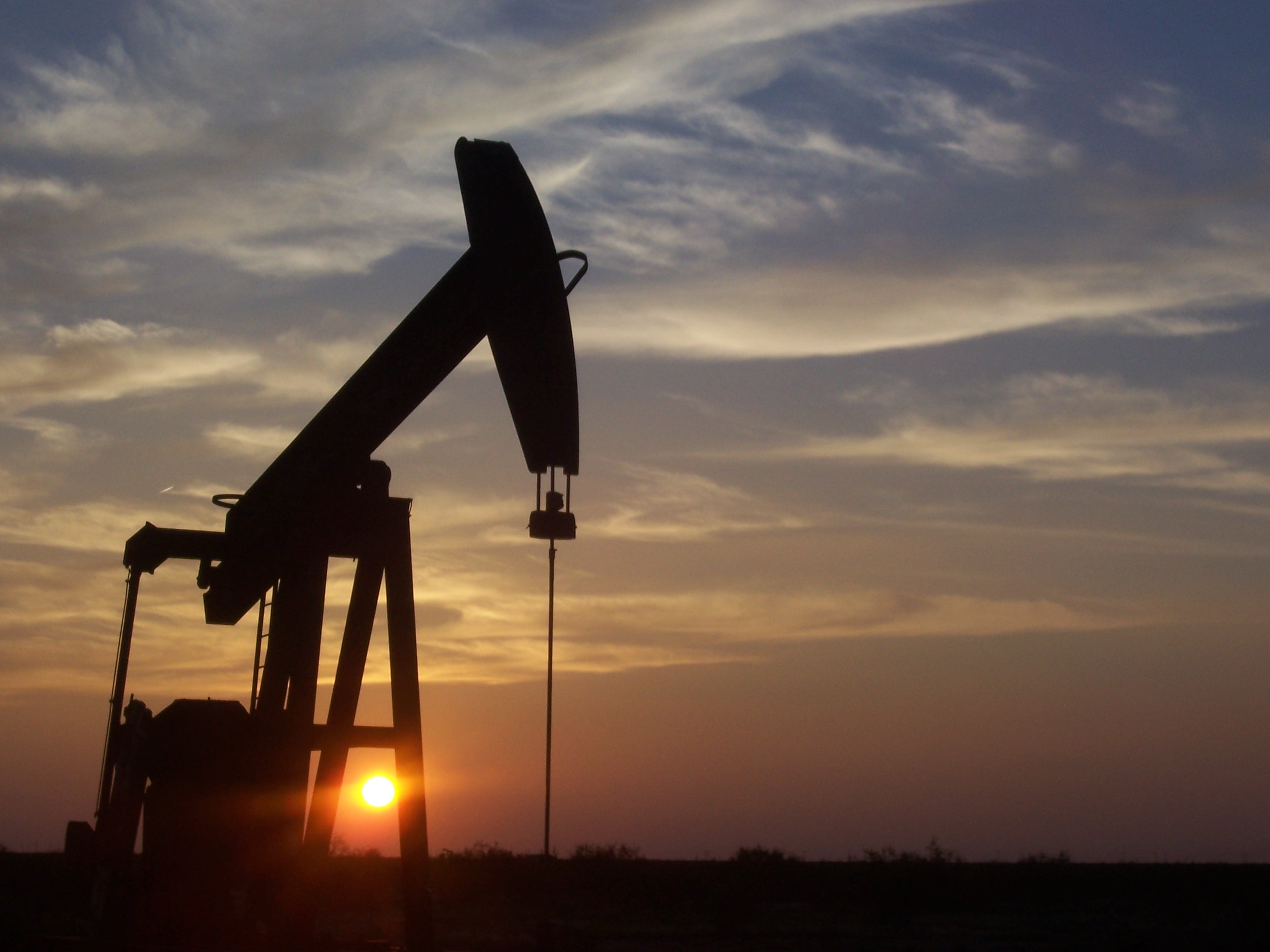
Oil industry has been governing the world politics for the better part of 20th century. It all started when a crazy retired railway man called Cornel Drake was hired to drill one of the first oil exploration wells. Using some old Chinese methods he and his workers started to drill a well in Pennsylvania, USA. After days of slow and difficult drilling without any results the investors gave up. A letter was send to Drake to close down the operations. Thanks to the slow postal system, on August 27 1859, the day the letter reached, Drake had already seen the first drops of oil rising through the borehole.  News spread rapidly leading to the mad rush for black gold. Widespread uncontrolled drilling led rapid increase in oil production and resulting decreasing in oil price making Drake’s well uneconomic. Drake died a poor man after kick starting one of the most powerful industries of the world. Oil Industry made many people rich, and probably the richest of them all was John D. Rockefeller. Rockefeller was a shrewd and cleaver businessman under whom Standard Oil Company gained monopoly over the oil business. Since then the industry has never looked back. The power of the industry was realized during the World Wars, where it played a key role in deciding the outcome of the deadliest battles in history.

Saturday, May 7, 2011

THE HYPOCRITE


– Written by an unrepentant oil geologist

He wore his favourite dress, sprayed his favourite perfume, today was a good day. The candle light dinner he had last night with the girl of his dream was still lingering in his mind. But that can wait, today he have to focus on the seminar he was about to give. He knew that it was the golden opportunity he was waiting for. It was time to bring his life back on track.

Thursday, November 11, 2010

Will Homo sapiens become the index fossil of Anthropocene?

The moment conscience segregated out of the unconscious, life was born. From that instant life had only one purpose – to survive. But the paradox of life and its survival is that life depended on life itself to survive. In that struggle for survival, both the predator and the prey evolved. Evolution made life more complicated. It created a complex web of food chains. Then came the anomaly of life, Homo sapiens. They evolved to become the most efficient species in fulfilling the motto of survival, but again, at the cost of life itself. Not only did they survive, they grew in numbers and are ruling the world. Using their sophisticated weapon of 'intelligence' they rose rapidly to the top of the food chain, they became the ultimate predator. Alone in the top, they had nothing to fear. Having no other predator to deal with, survival was supposed to become easy. Instead, it became more complicated. As they grew in number they had to fight their own kind for space and food. In that fight, numbers mattered. The more the number of men in a group, the stronger the group was. How to keep these vast number of men together? Where logos failed, mythos took over. The myth of 'identity', be it religion, tribe or totem, kept people together. It made them live together, eat together, pray together and fight together. In that 'intelligent' intra species combat, Homo sapiens became more 'civilised'.With help of their greatest strength 'intelligence', they became the species that now dominate the entire globe. In the Mesozoic the dinosaurs dominated the globe with help of their greatest strength, 'size'. Before they were wiped out, their greatest strength became their biggest weakness. Will human fate be the same? Will Homo sapiens become the index fossil of Anthropocene?


Monday, October 4, 2010

The World on Oil

Being a person from the oil industry, I thought this is the best place to begin my search. This search will take us back by 150 years, a time when the most powerful industry of all times was about to take birth. It will take you through the first drop of oil that came out of Drake’s well, through to the drops of oil that came out of the BP well in Gulf of Mexico. The former one came as a pleasant surprise, while the later also did surprise many, but not in a pleasant way. The search will also show us how this new industry grew in power rapidly to decide the fate of nations and changed the history of humanity forever. The industry suffered many setbacks, but it always came back stronger. The industry learned how to self-sustain by controlling the game of demand and supply. The supply was maintained by advancing technologies, moving into challenging areas and by conspiracies to capture big oilfields in the name of war. The demand, on the other hand, was maintained by making people more and more dependent on oil, making them so used to it, that they can never come out of it. And as long as this fine balance between the demand and supply was maintained, the industry could only grow from strength to strength.