ABOUT THE AUTHOR

Know more about Subhrashis.

JOURNEY OF SURVIVORS

Know about the unknown history of India. Click to Purchase.

5 QUESTIONS OF THE INQUISITIVE APES

Want to unveil the mystries of the universe? Want to know yourself? Want to be happy? Click to buy.

FOLLOW ON FB

Catch the latest posts.

FOLLOW ON INSTA

Keep up to date with the latest pictures.

WHATSAPP CONNECT

Talk to Author directly

Welcome to KHOJ: The search to know our roots and understand the meaning of our existence.

Prejudice is the biggest problem in the society. It can be it in terms of religion, cast, sex, skin-colour, status etc. Prejudice can also be in form of the feeling that human beings are the greatest creation, or even patriotism about artificially created borders. The motto of KHOJ is to gain knowledge and break that prejudice. But there is a word of caution for the readers. To break the prejudice KHOJ might throw upon you the concepts it believes in. If the reader believes on KHOJ’s perception without question, then KHOJ itself might incept a prejudice in the readers mind thus failing in it own motto. KHOJ is trying to break its own world of prejudice, but at times that prejudice might get reflected in its writing. Please do challenge them.

Monday, March 7, 2016

History of Indian Geology

Geologists, a study found, are the happiest students in campus. Being the only species that can survive just on fermented products, it is not a surprise. There are two thing geologists are fascinated about - rocks and on-the-rocks. Indian geologists, however, have not received the fame their western counterparts enjoy. You don't see Bollywood movies where geologists save people from deadly volcanoes or earthquakes. Indians have been exploiting the vast mineral resources of India for thousands of years. Books have been written describing the locations and identification criteria of precious stones and metals. But, geology as a subject, was brought to India by the Englishmen who wanted to find all hidden resources in the new land that they now governed. East India Company started mineral exploration in India from 1774.

The early geological observations was made in India not by a geologist, but by a zoologist named Francis Buchanan. He surveyed Mysore in 1800 and Bengal between 1807 and 1814. It was Francis who started the Alipore zoo in Kolkata. He noted down in details all the rocks he saw, even those which were used to make temples. He penned his observations in his book ‘Journey from Madras through the countries of Mysore, Canara, Malabar’. Again, it was a statistician named W.H. Sykes who recognised and coined the term ‘Deccan Trap’ in 1833. ‘Deccan’ comes from ‘Dakshin’ meaning south, and ‘trap’ from the Swedish word ‘trappa’ meaning stairs or terraces. These continental flood basalts formed at the end of Cretaceous Period triggered by the India-Seychelles break-up. Some blame the dangerous Deccan volcanism for the extinction of the dinosaurs. Bones of dinosaur was recovered from beneath the traps in Jabalpur by Sleeman. The bones of the Titanosaurus indicas was sent to Kolkata. The bones were confirmed to be that of dinosaur only in 1877. Decades later the dinosaur was gone. The Titanosaurus was rediscovered in 2013. It shy dinosaur was hiding inside a cupboard in Kolkata's Geological Survey of India.

The Doom of Dianosaurs

While the first geological map in the world was made way back in 1743, India had Her first geological map only in 1821. The map was that of Hyderabad, made by Dr. H W Voysey, often called as the father of Indian geology. In fact, geology as a science was taken up for the first time by Asiatic Society of Calcutta in 1808. The 27 year old geologist, H W Voysey, was sent to Calcutta as Surgeon of Trigonometric Survey. Trigonometric survey of entire India was started by William Lambton in 1806. George Everest assisted Lambton, and later succeed him. Appointment of a geologist in Trigonometric survey puzzled Voysey’s colleagues. Hastings had to clarify the need of a geologist in India. A geologist was necessary to understand the density of the  different rocks in the subsurface that deflected the plumb line while taking trigonometric measurements. Apart from gravity, there were magnetic anomalies that affected the surveys as well. One eccentric Dr. Robert Tytler died while trying to hunt down the magnetic pole near one such anomalous ferruginous hill in Gwalior. Voysey came to India to simply help in understanding the anomalies, in which he was not very successful. His mapping did help in understanding the geology of India. However, understanding geology was not why the government paid him. Despite objections from George Everest, Voysey’s salary was cut due to long absence from regimental duties, and he resigned from the post. Soon after, he died of malaria at a young age of 33 years while travelling to Kolkata (Calcutta).

The year before Voysey’s death, in 1823, local Indians presented Captain S Webb with ‘bijli ki har’ - the bones of lightening. These Himalayan fossils were used by local as charms, or by native doctors as medicines. Webb knew that the British would be able to make a better scientific interpretation of these fossils. He send them to The Royal College of Surgeons of England. The fossils were interpreted as an evidence of the great flood. More surveys were undertaken to find the animals that perished in the flood. Attempt was also made to relate the fossil finds to ancient Indian texts. When a giant fossil of turtle was discovered, some wondered if it was the Kumra (tortoise) Avatar of Vishnu. More vertebrate fossils were discovered from what is now known as the Siwalik Group. The name is taken from the Siwalik Hills. Siwalik literally translates to the ‘tresses of Lord Shiva’. Siwalik group are molasses deposits formed by erosion of sediments from the rising Himalayas. They are around 5000m thick and cover the entire Indo-gangetic plain. The dead animals of Siwalik provided the fundamentals in understanding the Mio-Pliestocene epoch. They unfortunately said nothing about the great flood, nor was the fossil of Matsa (Fish) Avatar ever recovered!

The real need of geologists in India came from the coal industry that fuelled the Industrial Revolution in Britain. Raniganj Coalfield was the first field to be commercially mined in India. It was discovered in 1774 by John Sumner and Suetonius Heatly of the British East India Company. A new coalfield was discovered in Angul, Odisha in 1837. It was the Talchir coalfield, and it would bring a new puzzle for the geologists, to which we will come back later. Mining was mostly haphazard until the Coal Committee of India was formed in 1836. Geologist D. H. Williams was called from Britain to do a survey of Ranijanj, Jharia and Karanpura coal fields. He was appointed the Geological surveyor in 1846. Unfortunately, he fell from his elephant and died of ‘jungle fever’ in 1848. Three years later Geological Survey of India (GSI) was officially formed.

Establishment of GSI attracted more European geologist to India. The Irish Medlicott brothers made immense contribution towards Indian geology. They worked mostly around central India. While elder brother Joseph found the important Narmada-Son lineament, younger brother Henry worked the Vindhyas in detail. Proterozoic Vindhyan formation contains one of the oldest known life form on earth. Henry laid the foundation of Himalayan geology and is also credited for coining the term ‘Gondwana’ in 1872. ‘Gondwana’ means the ‘land of Gonds’. ‘Gond’ was probably first used by the Afghan traders for the Khond (hill) tribes in the 11th century. The rock Khondalite (Garnet-Sillimanite-Schist) also takes its name from the same tribe. It was the coals of Permian formations of Gondwana that attracted the geologists. Glossopteris was the key fossils of the Gondwana coals. Joseph identified the Lameta Formation and sub-divided the coals into Talcher, Damuda and Mahadevas in 1860. Joseph also noted the difference of these rocks from those of Vindhyans. The latter was only found north of the Narmada-Son lineament. However, it was not the Medlicott brothers, but Blanford brothers who found the big puzzle.
While studying the coal beds in mid 1950’s the Blanford brothers found huge boulders that could not have been carried by anything other than glaciers. On noticing closely, these boulders had stripes that confirmed them as glacial deposits, something unexpected in these part of the world. Similar boulders were soon found all across India. Mr Oldham correlated them with similar beds seen in Australia. One way of explaining the puzzle was ice-age, a time when glaciers covered most of the earth. As earth warmed up, the ice melted leaving behind the glacial deposits. Forests took over that formed the Permian coal beds.

Before the glacial puzzle was solved another came up further north, on the foothills of Himalayas. It was the old puzzle of gravity anomaly that Voysey was not able to solve. Some errors in positioning were noted by the surveyors while doing trigonometric survey south of the Himalayas. The position from Trigonometric survey done by astronomical measurement did not match the one done by triangulation. The extra gravitational pull from the Himalayas were thought to be the reason for the anomaly by Mr. Everest. To get a better hold of the measurement a mathematician, the Archdeacon of Calcutta, was recruited.

John Pratt was a brilliant mathematician. He became the chaplain of the East India Company in 1838. In 1850 Pratt became the Archdeacon of Calcutta. While studying the anomalies he found that the results were counter-intutive. The mountains attracted the plumb line less than it should, as if they were hollow. While similar measurements near the beach had opposite affect, as if there was an invisible mountain in the ocean. Pratt wrote a paper with his observations, which went to another mathematician, George Biddell Airy, for review. Airy was already a respected scientist. Airy, the man who calculated the mean density of earth, had better explanation for the anomaly. Mountains, he explained, were blocks of lighter crust that floated on the heavier asthenosphere. Mountains have roots of lower density material and thus pulled less. The oceans have anti-roots that pulled the plumb line towards itself. Airy published his hypothesis of isotacy along with Pratt in 1855. Two years later the revolt of 1857 took place and the Queen of England replaced the East India Company. GSI, however, continued to function. Indians started to join GSI, Ram Singh being the first one to join in 1873.

If the lighter continental crust is floating, does it swim as well? That questioned would not be answered soon. The geologists would take one step closer to the answer, but not before really messing it up. Glossopteris was the main plant fossil in the Gondwana coals. The term ‘Glossopteris’ was coined by a French geologist named Adolphe Theodore decades back in 1828. It means ‘tongue fern’ in Greek. Though it looks like a fern, it was later classified as gymnosperm. They are tall trees, sometimes growing 30m high, and produce seeds. Glossopteris became extinct at the end Triassic. The fossils of Glossopteris was studied in detail by Austrian geologist Eduard Suess. He found similar fossils from not just India but also South Africa, Madagascar, Australia, South America and later from Antarctica. Glossopteris fossils of Antarctica was discovered by the famous Robert Falcon Scott. Scott could never make it out of the continent with his Glossopteris. He was buried with his fossil collection, which was recovered later.


Suess claimed in 1885 that land bridges connected the continents containing Glossopteris fossils. He named this super-continent Gondwanaland, “after the ancient Gondwana flora which is common to all it’s part.” Further studies unearthed other similar flora and fauna from these distant continents that were not connected. The mystery of this strange connection between far-away lands bred new myths, and sometimes fuelled old ones. People started to hypothesis lost continents that sank beneath the ocean.
Lemuria - The Lost Continent


Finding of the fossils of Lemurs in India and Madagascar, but not Africa, was an anomaly that confused zoologist and biogeographer Philip Sclater. He proposed in 1864 that there was a lost continent, that he named Lemuria, which acted as land bridge between India and Madagascar. Lemuria caught the fancy of occultist Helena Petrovna Blavatsky. To her it was the land where superior, and spiritually more pure, humans lived. Blavatsky moved to India in 1880 where her cult movement got help from Dayananda Saraswati's Arya Samaj, a Hindu reform movement. She wrote about it in her book ‘The Secret Doctrine’. After she died of influenza she was succeeded by her disciple Annie Besant. The Tamil politicians later misused the discredited idea of Lemuria. Lemuria became the lost Tamil continent Kumari Kandam - the cradle of civilisation. According to them the last bit of the continent still exists in Kanyakumari. At that place now stands the Vivekananda Rock Memorial - where Swami Vivekananda received enlightenment before leaving for the World Congress of Religions of 1893 in Chicago. That piece of rock, where the memorial now stands, is composed of Charnockite.

The Charnockites formed deep within the crust 550 Million years ago when India fused with Antarctica. Kanyakumari was the triple junction along which the Gondwana break-up took place in Jurassic.  We now know that there were no lost continents, but India, Africa, Antarctica, Australia and Latin America were once fused together into one super-continent that we now call Gondwana (without the ‘land’ as ‘wana’ already means land). 

Gondwana


The Charnokies were named by Thomas Henry Holland in 1893 after Job Charnock, the founder of Calcutta. It was the same rock with which the tombstone of Job Charnock was made. Holland later became the director of GSI in 1904. He realised that the geological history of India did not match that of Europe. He proposed four new geological eras for India based on the unconformities found in India. They were Archaean, Purana (Proterozoic), Dravidian ( Cambrian to Middle Carboniferous) and Aryan (Upper Carboniferous to recent).


GSI continued to function actively after Independence. It was headed mostly by European geologists. However, Indians were being trained in the subject in colleges like Presidency College Kolkata where geology was taught since 1892. Maharajapuram Seetharaman Krishnan was the first Indian director of GSI. His book on Indian stratigraphy is still read geology students of India.

Saturday, February 27, 2016

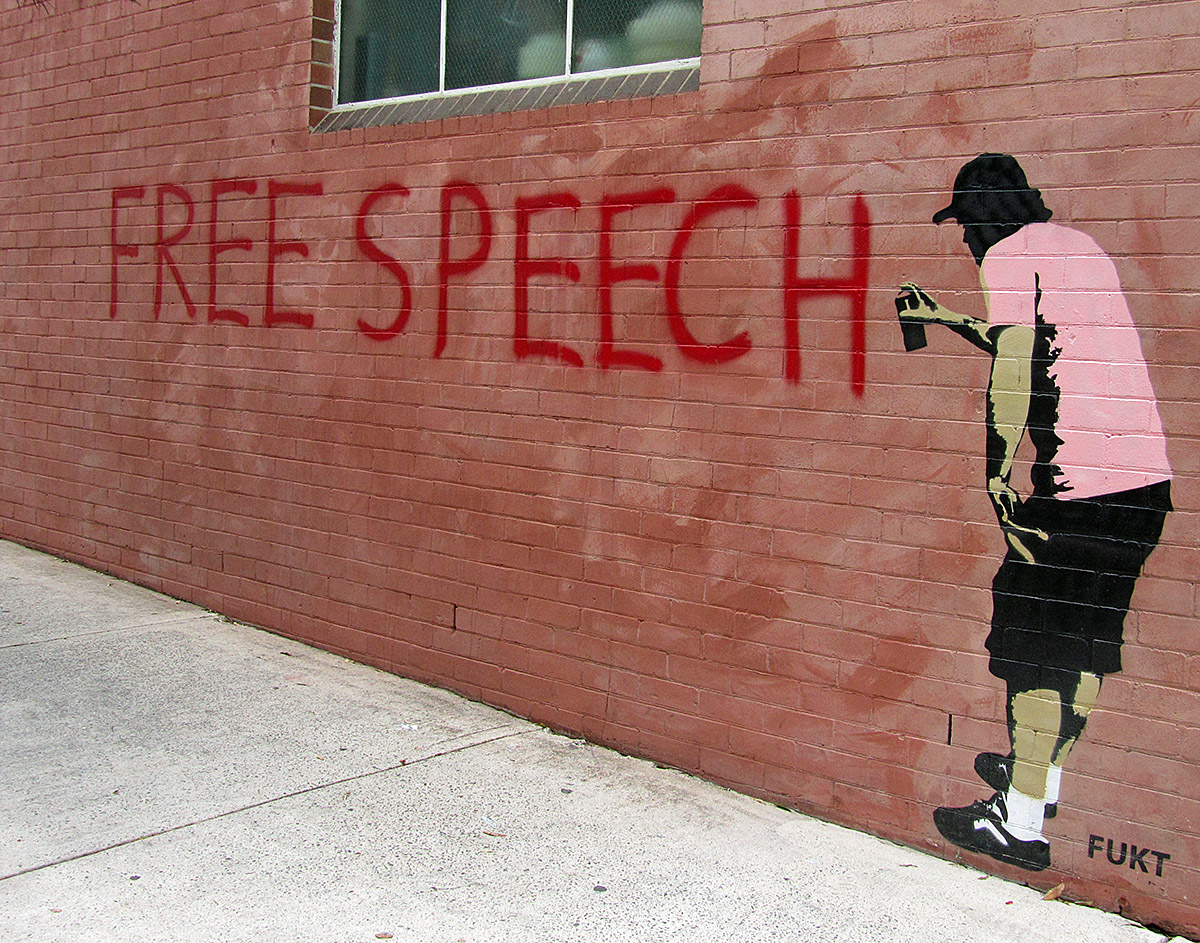
Free-speech vs Sedition - Questions thrown by the JNU incident

When I was a kid I had this strange belief that if I kept jumping out of my window, my offspring’s would be able to fly. That was my idea of evolution. Unfortunately, I realized that it was not how evolution worked. Fortunately, I realized that it was not how evolution worked before I jumped.

Evolution works is strange ways. While the fittest may or may nor survive, it is the survivors whose genes dominates the future population of a species. I wonder if the psychology of human population also evolves the same way. 
Winners write history, and it is the ideas of the winners that inspire the psychology of future generations. 

The psychology of losers fades away while that of the survivors dominates. As situations change, new survivors with their new ideas dominate the old ones and the psychology of the society evolves.


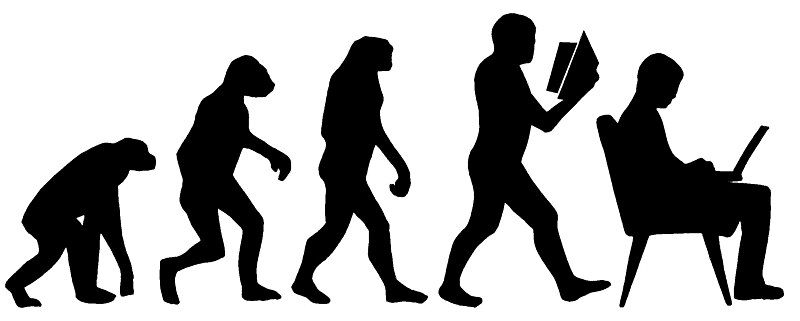
Society itself is a strange concept. Our ancestors did not just walk upright; they also freed their hands. They could now take their future in their own hands. These modern apes did something unprecedented. They broke the rule of the jungle, the rule of ‘survival of the fittest’. 
Human beings got together to build a society where even those who were not fit could survive.


But, there was a price. The society was built on ideas - ideas that were made-up, illusions, or maya – but necessary. These ideas created a sense of unity by setting up common rules. Rules curbed natural instincts. Rules tried to paint everyone in the same color, colors that created identities. India somehow managed to protect itself from the monochromatic evolution and brought fluidity within the rigid concept of identity. 
While karma bound the society by rules, the ultimate liberation came by getting rid of the maya. That fluidity is the identity of India.


Old ideas had been questioned and they faded away as new ones took its place. Identities evolved from totems and tattoos to religion and skin color and now nationalism. The ideas changed because they were challenged. The change came through conflicts, violence and revolts. Unlike human civilization, the evolution of human psychology still follows the rule of the jungle. The fittest ideas flourish.


Just like society, the concept of ‘free-speech’ is changing the way psychologies evolve. Free speech tries to give space to all ideas, even the weak ones. Fit ideas are the popular ideas that have more voice, and not necessarily the better ones. Similarly, a weak idea sometimes has the potential to change the world for better. Globalization has given birth to a new idea – the idea of nations without borders and it is challenging the strong-rooted nationalism. The idea of nationalism is so strong that in many countries questioning it amounts to sedition.


Curbing free speech gives people in power free hand in exploitation. While logic strongly favors free speech, the threats from terrorism tilt the balance towards the other side. Where should one put the limit? When does a free speech become sedition? Is questioning the idea of nationalism sedition? Is threatening the country sedition? That is the debate that JNU incident had thrown open.


Before going into the debate let us first clear two things. As discussed earlier, ‘Nationalism’ is a creation of human mind, a maya. It is an idea that is not the absolute truth, but necessary at the present scenario. The idea of nationalism is going to evolve and something else is going to take its place in the future. Secondly, freedom of speech is the necessity of modern age. Without it, we would be dragged back to the medieval era. The debate isn’t about the existence of freedom of speech. Rather, it is about where to draw the tricky line. To understand the location of the line let us, for the time being, forget out prejudices - political or apolitical.


According to Indian sedition law as per IPC Section 124-A: Whoever, by words, either spoken or written, or by signs, or by visible representation, or otherwise, brings or attempts to bring into hatred or contempt, or excites or attempts to excite disaffection towards the Government established by law in India, shall be punished with imprisonment for life, to which fine may be added, or with imprisonment which may extend to three years, to which fine may be added, or with fine.


The validity of this law in today’s era can be debated in length. Free speech is slowly gaining voice and developed countries have begun listening to it. The idea of a nation without borders is also gaining ground. New Zealand repealed sedition law in 2007-08. Australia replaced their sedition law in 2011 with punishing just those who are ‘urging violence’. England has also abolished it. Sedition law is now questioned in the largest democracies of the world – India and US. From a humanitarian point of view, ‘freedom of speech’ becomes a danger only when it threatens to hurt someone physically. That is when it should become ‘sedition’. Considering that as our thin line, let us discuss the important questions that the issue has raised.


Q1: Is ‘Bharat ki barbadi’(destruction of India) sedition?
India is not the piece of land that we made our own. India means the people of India. ‘Bharat ki barbadi’ threatens its people of physical harm and is thus sedition. We cannot deny the fact that home-grown terrorist organisations exists in India. They have carried numerous terror attacks that took many lives. No country would allow promotion of terrorism, and neither should India.
‘Freedom of speech’ should not be the veil terrorists use to protect themselves.


Q2: Is asking for Kashmir’s freedom sedition?
Just like India, Kashmir means the people of Kashmir. It is their choice where they want to be. It does not matter what India, Pakistan, United States, the JNU professor, you or me have to say. Asking for Kashmir’s freedom is not sedition unless people are hurt to get that freedom. Indian freedom fighters were booked of sedition for wanting freedom, but they are our heroes. Many people of East Pakistan were booked for sedition because they wanted freedom, now they are heroes of Bangladesh. The Tibetians who are given place to stay in India also wants freedom from China. 
Debating about freedom is freedom of speech, not sedition. 
Kashmir is the paradise on earth and India’s symbol of secularism. I would hate to loose it. But I have no right to stop someone else from debating it, much less jail him. That would only breed more disgruntled people who would want to separate.


Q3: Is saying ‘Jitne Afzal maroge, har ghar se Afzal niklenge’ sedition?
That’s a tricky one. Supreme Court has given a verdict according to which Afzal was responsible for the parliament attacks where people have lost their lives. 
If they are talking of breeding more Afzals who are going to kill more people, then that is definitely a threat that India cannot ignore. That is sedition. 
However, questioning Supreme Court’s decision that Afzal might not be guilty, is not sedition. And if Afzal was involved in the attack, one can also discuss if this crime was such that it required a death penalty. Capital punishment in itself is a subject that is being debated all across the globe. 
Debating capital punishment is not sedition.

Q4: Strange line of thought: Our army is dying in the borders to save us and we are talking about freedom of speech!


No matter how much we debate and talk about nationalism and anti-nationalism, it is the soldiers who fight and give up their life to make sure that we can debate. ‪Respect‬ them for that. Soldiers do not care about their life, but perform their duties faithfully. Respect them for that. Hundreds of soldiers laid their life during Kargil war to protect us. Respect them for that.
Soldiers are doing their duties for the people who recruited them, and doing it very well. During World War II Subhas’s INA and Indian army fought against each other and gave their lives. Both armies gave their life to perform their own duties. It did not matter which side they fought for. In a battle, soldiers from both side dies. Respect them.
 And if you respect them, it is time to perform your duty. As an ordinary citizen you do not have the power to fight wars, but you do have the power to stop one. Do your duty to save the lives of millions of soldiers who die because of political malice. 
Erase the boundaries created by nationalism, religion, race, caste, or whatever that create the sense of separate identity - the root cause of war. If not...at least don't drag our army into politics.


There is only one thing that is more dangerous than politics, insecure politicians. They can go down to any level to grab, or hold on to, power. Let us not get too involved into that. 
Get rid of the political glasses through you see just red, blue, green or saffron. Let’s look at things for what that are, lets look at the entire spectrum. 
Indian society had never been monochromatic. Let us not make it into one. That would be tragically boring. Let’s give all ideas a space. Let the better ones evolve. When you hold on to one idea and stop evolving, then you know that the end has come. Change is the only constant. 
You only stop evolving when you are extinct.

Wednesday, November 25, 2015

India and Intolerance

‘Intolerance’ has been the hot word for the past few months. While many people thought that the debates would die out after the Bihar elections, it clearly didn’t. The debate has been whether India has become more intolerant or whether it is just a political propaganda? We all seem to have an opinion about it, and I too have mine. The answer to the heated question about rising intolerance is not a simple one. It has two parts that one needs to understand separately. Firstly we need to understand what intolerance means and whether it is good or bad, and secondly we need to put the rise or fall of intolerance in India within a proper time framework.

‘Intolerance’ can be defined as “unwillingness to accept views, beliefs, or behaviour that differ from one's own.”

Going by the definition, it can be debated if ‘intolerance’ is a good thing or a bad thing. A civilised democratic society is supposed to be tolerant and have room for difference of opinions. That is a good thing. But if you are unwilling to accept views, beliefs and behaviour of groups like ISIS, then also you are intolerant. Most will agree that such type of intolerance it is not bad. So where is the thin line between intolerance becoming good or bad? Is ban on consumption of beef bad-intolerance? Is the brutal criticism of Aamir Khan’s statement good-intolerance? There is no single answer to these questions as good and bad is a perception, which depends on the person. When we talk about rising or falling intolerance we need to understand what affects people's perception of intolerance. 

Perception of ‘intolerance’ depends a lot on how media projects it. The TRP driven media can go down to lowest standards to get viewers. But, at the end of the day, it is the viewers who decide what gets them TRP. Media has, of late, projected an image of rising intolerance since BJP came to power. Let us look at some statistics reported by ‘The Hindu’. During UPA’s rule in 2013 there have been 823 incidents of communal violence while in 2014 (NDA came to power on 26th May) the number was 644. In 2015, the number was just 330 till June. What media has claimed is contrary to the statistics. Thus, the perception of intolerance and actual intolerance is not the same thing.

One thing that has changed dramatically in the last decade is the rise of social media. It has helped connect millions of Indians and gave them a platform to raise their voice at the click of a button and become a hero. Most people write post for ‘likes’ that boosts their ego and make them feel better. That is exactly what we bloggers do too. It is not a bad thing. The voices and opinions in the social media do, however, affect our perception of intolerance. Has the intolerance grown in social media? My perception is yes. The reason is the growth of the internet users in India. Also, intolerant people make more noise and thus are all over the media, even if their number is low. Bad-intolerance is when instead of debates we start insulting people having different opinions. Calling others by names like ‘feku’, ‘bhakt’, ‘sickular’, ‘pseudo-liberal’, ‘aaptards’, ‘anti-national’ etc. is a sign of immaturity. Such immaturity has filled the social media world over, not just in India. The reaction of social media to the comments of Aamir Khan is one such incident of our immaturity.


Aamir Khan’s comment came as a shock to me. Being a national icon and the brand ambassador of Incredible India my personal opinion is that he should have been more sensitive. But, people's reaction to his comment was even worse. It just proved his point. We can disagree with him and have a debate on it. We can share a few jokes and enjoy the controversy. But abusing and insulting him was immaturity. It was our show of bad-intolerance. In a democratic country, people have a right to give their opinion and feel free to express their sentiments. Did we try to understand why he said that, before we shouted in protest? The way people reacted to his movie PK and threatened him because he was a Muslim, even though the majority of the people who made the movie was a Hindu, could be a reason. From calling him a terrorist, burning his effigy,  to telling him to go to Pakistan was not a sign of our tolerance. If he or his family felt threatened, they had reasons. While the actual intolerance may not have gone up, our behaviour in the social media has increased the perception of intolerance. That is alarming because it does not take much for the intolerance to spill over from social media to our real lives. The responsibility lies with us to make sure that we do not let that happen.

The second part of this post was about putting the rise or fall of intolerance in India within a proper time framework. Is intolerance rising in India? My answer is in the affirmative. Is it rising since BJP came to power? To that, my answer will be no. Communal riots are not new to India. Over the years, since we gained Independence, India calmed down. All of that changed in the 80’s. As the popularity of Congress decreased and they became insecure they started to mix politics with religion. It was an explosive combination. Muslim Women Protection of Rights on Divorce Act of 1986 passed by Rajiv Gandhi after the Shah Bano case acted as a catalyst for the Hindutva Movement. Under Rajiv’s influence, the district judge of Ayodhya ordered the opening of locks to permit worship at a small Hindu shrine within Babri Masjid on 1st February 1986. It was a dangerous move that will become the root of the violence of 1992. 

Communal harmony deteriorated rapidly in the 90’s. Two separate episodes rocked India that challenged her claim of a secular nation. After the success of Advani’s rath yatra BJP went ahead with their agenda of creating Ram temple in Ayodha. They came to power in UP and the BJP CM Kalyan Singh himself was providing food and shelter for the thousands of volunteers (kar sevaks) coming to Ayodha to reclaim what they thought was the birthplace of Ram. It was 6th December 1992 when kar sevaks crawled over the mosque with axes and hammers, bringing down the century-old structure within hours. Advani himself did not expect the turn of events and later expressed his regrets publicly. But the damage was already done. What happened in Ayodha triggered a series of riots around India from Gujarat, Delhi, Madhya Pradesh, Uttar Pradesh, Karnataka to Assam, with Mumbai being the worst affected. Before the army could bring the city under control, 800 people had already died, of which two-third were Muslims. The riots were followed by a series of bomb blasts in Mumbai starting 12th March 1993. The attacks were made by the dreaded don Dawood Ibrahim as a revenge for the death of Muslims. This led to a division in Dawood’s D-Company as Chotta Rajan split away taking most of the Hindu gangsters with him.

The second episode was taking shape up north in the valley of Kashmir, once known as the paradise on earth. The separatist movement by Kashmir Liberation Front was now replaced by the shouts of Jihad by Hizb-ul-Mujahideen. Kashmiri Pandits constituted around 15% of the population in the valley before independence. They were now the targets of the Muslim terrorist organisations. On 19th January 1990 mosques of Kashmir declared that the Pandits are kafirs and the males had to leave the valley, convert to Islam, or get killed. The women had to be left behind, to be used as sex slaves by the militants. What followed was a massacre of the Pandits and sexual violence against the Hindu women. Thousands fled away from the valley as the population of the Pandits in Kashmir reduced to 3%. The Muslim terror organisations of Kashmir got support from Pakistan and ISI. After the end of Cold War all the extremists who were fighting against Russia in Afghanistan found a new ambition: liberation of Kashmir and disintegration of India.


Since then the communal polarisation has only increased. Politicians have misused that to their own advantage. The social media is giving it a platform to grow. BJP, being in power, have to handle the situation carefully. Oppositions are going to play all cards, as BJP did when they were in opposition. It is upto BJP to be mature enough and take strong actions before things get out of hand. Not just India, intolerance has been on the rise the world over. Religious conservatism is starting to gain ground once more. Comments about i-card for US Muslims from US Presidential candidate Donal Trump and still being one of the strong candidates is a proof of that. 'Islamophobia' and religious intolerance has been rising even in a liberal democracy like US. Indian politicians say a lot of stupid things, but a candidate running for the post of prime-minister and giving such a blunt statement is going to make him loose all votes. While ISIS carry out terrorist attacks and behead innocent people, such brutality is still not thinkable in India. But, as intolerance rise world-over, India will not be left behind. We need to be very careful about the future we choose for ourselves.
Intolerantly shouting and claiming that we are tolerant is not going to help us. 
While ISIS like brutality in not expected in India, such brutality was not unheard of in this land. Thousands were raped and brutally murdered during the partition. The Sikh and Gujarat Riots were no different. Given an opportunity, we can be as brutal as any other community in the world. Let us not give ourselves the opportunity to become brutal.

Tuesday, November 24, 2015

HAMPI TRIP PART 1: Empire of Apes


We have been planning this trip for years. Finally after six months of planning we were ready to head towards Hampi, Karnataka. We could have never anticipated that the ‘green-tax’ imposed by Delhi government was going to jeopardise our entire trip. The new tax that was suddenly collected from mid-night led to chaos and a seven-hour long traffic jam starting from Gurgaon-to-Delhi MCD toll booths. Luckily, we were quick to realise it and took a u-turn before getting stuck in the traffic. To catch the flight we had only one option - drive in Gurgaon like a Gurgaoite. Which means driving the wrong way on the highway. Thanks to the efficiency of Delhi police, after breaking almost all the traffic rules we managed to reach Delhi airport without getting caught. Check-in and security went smooth and we boarded the flight on time. The captain announced that the Jet airways flight was going to start before its schedule as per their no-delay policy. The announcement was the only thing they did before schedule. Suddenly, out of nowhere, fogs engulfed the airport. The fog was here before winter as if to see us off. The flight finally took off after a delay of more than an hour. Despite the unexpected start, our much-anticipated journey has begun.

Hyderabad Airport

Our flight reached Hyderabad at around 10:30 AM. It was our first visit to the newly created state of Telangana. We took a cab to Kacheguda Railway station, from where we were supposed to take the train to Hospet. The train was scheduled for departure at 9:00 PM. We checked in a hotel near the railway station. There are plenty of options for short stay near the station. We had half a day to roam around Hyderabad. Since we were short of time we fixed our priorities. Right on the top in the list was Hyderabadi-Dum-Biriyani. We headed straight to Paradise Food Court. The mutton-dum-biriyani was good, but we did feel that the place was over-hyped. Later, we tried Shadab [https://www.zomato.com/hyderabad/hotel-shadab-ghansi-bazaar] which we liked better. Next in our list was the Golconda Fort. Originally a mud citadel of Kakatiyas, it was rebuild in 16-17th century by Qutub Shahi kings. Mohammad Quli Qutub Shah was a king and a poet. Much to the dislike of his father, he fell in love with a Hindu courtesan named Bhagmati. Against all odds he married her and gave her the Muslim name ‘Hyder-Mahal’. The king later built a new city outside Golconda Fort. The city was named Bhagnagar after his queen’s original name. Later the city was renamed to Hyderabad after her Muslim name. Charminar, the icon of Hyderabad, was built by him in the city that he made his new capital. Another interesting tale from Golconda is that of the Taramati Mosque. The amazing fact is that it is a mosque named after a woman, and what is even more surprising is that she is a Hindu courtesan. Abdullah Qutb Shah must have fallen for the two beautiful dancing sisters Taramati and Premamati. Though the sisters were not lucky enough to become a queen like Bhagmati, they made sure that their name got written in history. The king was so pleased with their performance that he declared in public that he is going to grant any wish that they want. Instead of money the sisters asked for fame, they asked for a mosque to be built inside Golconda for women that will bear their name. The king had to agree. The legends of Golconda will bring a smile on your face even after the long walk around the fort.

Map of Hyderabad

Golconda Fort entrance

Inside Golconda


Bhagmati Mosque

Seesham tree trunks were used as pillars to built the fort

Internal pipelines to supply water from the tank on the top of the fort to the rest of the fort.

Ruins of Golconda...Most of the fort was destroyed during Aurangzeb's raid. 

Charminar

From Golconda we went to see Charminar and Mecca Mosque. We strolled around Hussain Sagar lake in the evening, and then headed straight to the railway station. We took the 17603 KCG YPR EXP to Hospet. Our car was already waiting at the station. We pre-booked a car for entire 8 days. 
The car was booked through Mr. Doddamani and we had a wonderful experience. Following is his contact details.

EMAIL ID kartourinfo.doddamani@gmail.com
MOB: number *8884007796 *9845342325 *9481736812  *8147210882
DODDAMANI M.D  
KARNATAKA  TOURISM INFORMATION AND TRAVEL BOOKING CENTRE 
BANGALORE and HUBLI

Prashant, our driver, was very quiet and gentle. Being used to the cab service of Haryana, his punctuality and humbleness was striking; and at times irritating.  When he was talking in his phone Prashant kept saying ‘sorry sir’ after all the sentences. Only later did I realise that ‘sari’ in Kannada meant ‘correct’, and he wasn’t being apologetic. My first lessons in Kannada. We went straight to our hotel KSTDC Mayura Bhuvaneshwari. The hotel is in a great location, very close to Hampi attractions. Food is good, and they have both veg and  non-veg options along with kingfisher beer. There's a green lawn and plenty of trees inside the hotel complex. Rooms, however, are not great. Beware of the guides roaming around the hotel claiming to be government recognised, they are mostly fraud. For genuine guides go to the tourist information center in Virupaksha Temple. 

Tasting the Thunder

Hampi is a place filled with mythological events. The place takes its name from the original name of Tungabhadra River, Pampa. Pampa, Brahma’s daughter, was a devotee of Shiva. Impressed with her devotion, Shiva asked her for a wish. All she wanted was to marry him, and Shiva agreed. During their marriage gods showered golds, from which was formed Hemakuta Hills. Hemakuta literally means a ‘heap of god’. One can trek up the hill to see the sunset. 
After having lunch in the nice little restaurant called “Mango Tree” [http://www.tripadvisor.in/Restaurant_Review-g319725-d1194465-Reviews-Mango_Tree-Hampi_Karnataka.html],  near Virupaksha temple, we took a ferry and went on the other side of Tungabhadra River. This place, Kishkinda, was once the abode of monkey gods. Walk the road for few minutes and you will reach the auto-stand. Hire an auto that will take you to the important places. The nearest spot to visit is Anjaneya Hill, the birth-place of Hanuman. The first thing that is going to catch your eye in Kishkinda is it’s breathtaking landscape. The large boulders scattered around, similar but grander than Alabama, is going to make you wonder what happened here? Legend has it that the boulders made their way here because of the war between Bali and Sugreeva, fighting for the throne of the Empire of Apes. During the fight they threw boulders at each other that got piled up all around. The boring truth, however, is that the unusual landscape formed by millions of years of (spheroidal) erosion of the granites, solidified acidic magma, that formed billions of years ago below the surface of Hampi. Even if for a moment you ignore the mythologies and the rich history of this place, just the scenic beauty of the landscape is going to make you visit it again.
Ancient Bridge

Tungabhadra River

Ignored sculptures near the ferry point

Bounders of Kishkinda


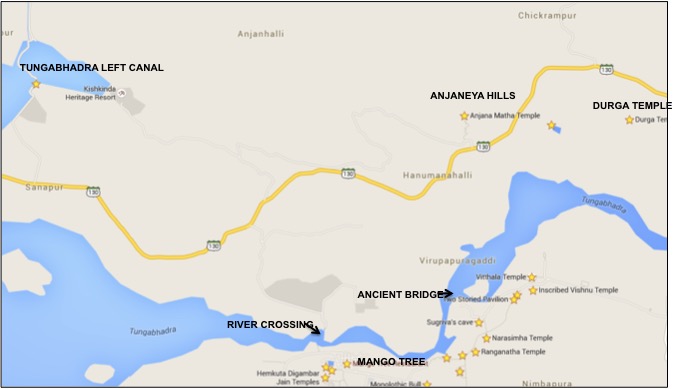
The whole trip on the other side of Tungabhadra river is going to take 3-4 hours. You would like to visit the following places: 
  • Ancient Bridge
  • Anjaneya Hills
  • Laxmi Temple
  • Pampa Sarovar (we did not go there)
  • Durga Temple
  • Ranganatha Temple
  • Tungabhadra left canal on reservoir road.


Map of important locations


Don’t forget to hop on to the coracles. These are circular boats, locally called Teppa or Harigolu, is made of cane and leather, and has been used by the local people for centuries. Domingos Paesa, a Portuguese traveller, described these boats 500 years ago. Nothing has changed over the years. If you have guts ask the boatman to spin the boat. It is an awesome experience. 

A Coracle
By the time we returned back to Virupaksha temple it was 4:30 pm. We booked our guide for the next day from the tourist center. The guide costed us 900 INR for a duration from 10am to 2 pm. Rest of the evening we walked around the ruins just by ourselves. The main part of our trip had just begun....

Friday, August 14, 2015

Indians - The Survivors

We Indians have come a long way since our ancestors first arrived from Africa 70,000 years ago. We had our ups and downs, but we survived. For other countries winning is necessary for survival. But for us survival is winning. Kingdoms rise and fall, invaders invade flourish and perish, but we continue to survive. One thing that we have learned through the struggles is that survival is not about planning or being organized. That might help you win battles, but to survive you need to stay alive each and every moment helped by your intuition. Indians were never good with chess. But when Anand defeated the highly organized Russian chess players he did that through intuition and not through tried and tested formula of rigorous planning and strategy. He showed the world a new way of winning chess, the Indian way. Yes, we are short sighted like our policies. But when the opponent is strong no planning helps you. Instead we take one step at a time surviving the moment. We survived the Greeks, the Afghans, the Mughals and the Europeans. Not many can claim of surviving such an onslaught. But we did it, one invader at a time. Probably that is why we love cricket so much; it is played one ball at a time. It is obvious in the way we walk or drive, one gap at a time. While developed countries are slaves of rules, true democracy can be seen on Indian roads - power to people.

REF:Pixabay

Many people woder about the identity of India. Some even say that India has never existed, and it was the Britishers who created India from various different tribes/kingdoms. Even today India struggles to find one single identity for itself. What defines India? Is it Gandhi’s non-violence, Nehru’s secularism or RSS’s Hindutva? None of them is the true answer. India is defined by its lack of identity. India never had a true identity, and that is what separates it from the countries bodering it.There are 6 major religions in India and 356 indegenous languages. It is that uniqueness of diversity that makes India one country. Many different cultures came to India and tried to mould India in their fashion. Absence of identity meant that we never had an identity crisis. Contrasting cultures were never a threat. While the Islamic State today struggles and fights to hold on to their identity, instead of resisting the change India on the other hand accepted and assimilated all the differences. India has always been a culture, a way of life, a concept that is not defined by its borders. It gave India its amazing disorganized diversity. It is this chaos and the extravaganza that defines India. The plethora of colour sound and smell, good bad and ugly, is an assault on the senses for an outsider. It can excite and exasperate a visitor, both at the same time. No wonder India is called the mystical land of the East.


Close to seventy years of freedom and India still have the problems of corruption, illiteracy and poverty. Looking at India today one can come to the conclusion that we have failed as a nation. But, we often forget the condition of India when we achieved our independence. It was a fragile nation and very few thought that it will survive. Our biggest achievement post-independence has been the story of our survival. We survived as a nation without breaking down to pieces despite the struggles, and today we can dream of becoming a global power. As Shekhar Gupta puts it, the concern of most Indians evolved from roti, kapda aur makaan (food, cloth and shelter); through bijli, sadak aur pani (electricity, road and water); to padhai, sehat aur naukri (education, health and job). That itself speaks of growth. Though lots of concerns still remain, our once biggest threat of surviving as one nation is now eliminated.


We are a population of 1.2 billion people and growing, 70% of whom are below 36 years of age. As high as 26% of the population is illiterate despite being a number that decreased substantially from 88% when British left. 70% of Indians live in rural areas of which 300 million are below poverty line [1]. A large majority of our countrymen does not have access to basic facilities like health care, sanitation, education and infrastructure. Though 18 % of world’s population live in India, our country only has access to just 3% of world’s drinkable water. As population grows the farmland, whose yield is just half of that of China, becomes smaller. Though India’s GDP has grown, just 14% of that is spent on agriculture. The conditions of our farmers are amongst the worst in the world. Not unexpectedly the farmers have started moving to cities for a better life, if they have not committed suicide. They are changing their profession to take up low skill informal services as vegetable sellers, car washers, maids and taxi drivers. Most of them live in slums, a home to almost 70 million people. The growing population of the cities along with water and space shortage, increase in consumption of energy, increasing pollution and unmanageable wastage is making the cities unstable. This is a big problem and with growing population these conditions are going to get worse. Add to that our lack of homogeneity, high corruption, and poor governance. Sashi Tharoor rightly said that India is not a developing country, but a developed country in advance stage of decay. This is a problem unique to India, and hence needs a unique solution. To make progress India needs to stop following the models of other countries and create one of its own, harnessing her strengths to mitigate her weakness.


Over the centuries we have found a formula of stability. Ironically it is something that has been much loathed by the west and our own people - the caste system. More than the system the problem has been the status, the hierarchy, and the exploitation of the poor. It wasn’t meant to be that way. But some professions had more demand and thus the people in those professions grew rich and powerful. With power came greed and exploitation. There were always people who challenged the system and changed their profession, but they were exceptions. In that system, however, everybody had a job and they became an expert in their field as they received training from their own family. Compromise of freedom for stability had always been the model of civilization. Just like its people the country itself was divided into numerous small village republics where the elected elders had the power to decide the fate of their own village. They had to make the right decisions as their decisions gave them respect in the society, and thus power. The whole country was divided into smaller and smaller fragments, each dependent on the other. This complex system was very difficult for the British to understand and they tried to break the system and remold it to a shape they were more comfortable with. It was a recipe for disaster. Time has come when we move back to Mahajanapadas, to poorna swaraj. Once the power is returned to people, they will become responsible.


We have to find a way to educate our youth. The old system has to be removed by an even older system like the Gurukul. Teachers should help students develop not just knowledge but personality and free mind. Students should be able to choose from different schools of philosophies and not forced into one. Average number of years of formal education in India is just 4.4. That number should be at least 12 years.  Once the basic education is complete people should be given training to develop specific skillsets. India had huge number of unskilled labour. But for the country to grow we need industries, that in turn requires killed labours. Only by developing skilled labours can we hope to compete against China. A bit of investment on this people will yield a lot better result for the government. Instead of spending huge amounts on the subsidies that leaves scope for corruption, that money should be used on things that directly benefit the people. This includes not just education, but also health care, social security and sanitation. Greek writers once wrote about how clean the Indians were. Oldest flushed toilets have been found from Indus Valley Civillization. Yet our cities are dirty and majority of our population defecates in open. That will change only when we take up the ownership. We will take up ownership only when we will be made responsible for it.


Agriculture sector has a lot of scope in India. Government should collaborate with other countries and help improve our yields and also manage the storage of grains. Our farmers have the potential to feed the whole world. Majority of Indians will get out of poverty once the condition of farming improves. What India also needs badly is energy. We currently spent a lot of money importing hydrocarbons increasing the trade deficit. The solution might lie in the rich thorium deposits of South India. India has one of the largest thorium resources and currently a lot of research is happening in BARC that will help create a nuclear reactor that can burn thorium as its fuel core. Once these nuclear plants are up and running it will solve a lot of our energy needs. Even though our research organizations do not have enough funds we are innovating. We are able to produce nuclear weapons, we have send satellite to Mars, all of these totally made in India. India produces a lot of usable patents. Think of the amount of innovation Indians can do once we get enough funds to develop research and technology. Birla is Asia’s biggest aluminium producer, Airtel has world’s fourth biggest subscriber base, Tata, Reliance and Mahindra has made it big globally. Indian generic drugs are saving millions around the world [1]. Young Indians have led top companies like Google, Pepsi, Motorola, HP and Microsoft. Given the opportunity Indians can excel in any field.


But above all we need to create people who respect and take care of each other.  The lack of respect is evident in the way we drive on the roads, or irresponsibly litter in public places. There is an increasing trend of orthodoxy that is coming back into the society.  We have to throw away the Victorian conservatism and become liberal once more. We have to start respecting our diversity and difference in opinions. Unity in diversity is our strength. Despite all odds we can develop into a rich and happy nation in our own way. But for that we need to free our mind as Tagore once wished. Being the hero worshiping people that we are we need our heroes, including those in Bollywood and cricket, to step forward and help free the mind of Indians. For long our country has been known for its potential, it is now time for execution.

It is still true what Mark Twain wrote about India on 1897 in his book ‘Following the Equator’:

“This is indeed India; the land of dreams and romance, of fabulous wealth and fabulous poverty, of splendor and rags, of palaces and hovels, of famine and pestilence, of genii and giants and Aladdin lamps, of tigers and elephants, the cobra and the jungle, the country of a thousand nations and a hundred tongues, of a thousand religions and two million gods, cradle of the human race, birthplace of human speech, mother of history, grandmother of legend, great-grandmother of tradition, whose yesterdays bear date with the mouldering antiquities of the rest of the nations—the one sole country under the sun that is endowed with an imperishable interest for alien prince and alien peasant, for lettered and ignorant, wise and fool, rich and poor, bond and free, the one land that all men desire to see, and having seen once, by even a glimpse, would not give that glimpse for the shows of all the rest of the globe combined.”


Wednesday, April 22, 2015

How Westernization has Corrupted our Culture!

Many Indians think that the one thing that's missing in most of us is the pride for our past. Centuries of slavery have made us forget our traditions. The cultures imported to India by our once western ‘masters’ have corrupted our own. We have been brainwashed to think that westernization is same as modernizatin.

If you agree, you are probably right in some ways. Our faith, our dresses, our customs, our morals and our lifestyles have definitely been influenced by the west. Some of us do take pride in thinking that western culture is the only right culture. Unless we get over our colonial hangover and start respecting our past we can never achieve our true potential. So, below are the four western (by which in mean influences from west of Indus) influences that we need to throw away right now.

1.     Gay


The biggest victim of westernization has been the transgender and the transsexual community. Indian mythology is full of transsexual and transgender people. Hijras, or the third gender, have been integral part of our culture. Our ancestors have easily accepted gender diversity. Infact, erotic sculptures in temples openly depict homosexual relationships. 

Such open culture was a shock for the Britishers who banned homosexual relations in 1861 under Section 377 of the Indian Penal Code. Hizras were labeled as a ‘criminal tribe’ in 1871 and stigmatized. Slowly the orthodox British culture became part of our own as we forgot the traditions of our once liberal past. While Section 377 was struck down in 2009 by Delhi High Court, it was re-criminalized by Supreme Court in December 2013. 

The sad irony is that Britishers have moved on and made gay sex legal, we however hold on to their legacy. Equality of status and opportunity is a fundamental right mentioned in our constitution and there will be no development without it.

2.     Sex


Ancient Indians were amongst the few people in the world who realized that sex was an important part of life. As per our ancient texts there are four goals of life: Kama (Sex), Artha (Wealth), Dharma (Duty/Faith as opposed to religion) and Moksha (Emancipation/Liberation). Not surprisingly, Kamasutra (400BC-200AD), the oldest treatise on sex, was written in India.  

Temples like Khajuraho have sculptures showing all four goals of life, Kama being an important part of it. Sex was not separated from sacred temples because sex itself was sacred. Why else should we worship Shiva-linga? Seeing any form of pleasure as sin is a very western concept, a form of Victorian conservatism implanted on Indian minds. It is time we get rid of it.

3.     Women


While most of India, barring North East, was a patriarchal society, women were not kept hidden within the four walls of the house. Going by the dresses women wore, as depicted in the ancient paintings, one can only wonder how covering a women from head to toe became synonymous to Indian tradition.  

Purdah was introduced to India only after the invasion of Afghans.  The dress preferred by the rulers became the dress of choice. The Indian mindset born out of invasions, insecurity and illiteracy needs to change. We need to stop judging women by the dress they wear. Being liberal is being India.

4.     Hindu


What is the difference between Indian and Hindu? While the former is Greek the latter is Persian, both used to denote the same thing. Since ancient times our country was defined by oceans in the south, mountains in the North and the mighty Sindhu River in the West. To enter India it is this river that one had to cross first, and thus Sindhu River became our identity. Since the Persians pronounced ‘s’ as ‘h’ ‘Sindhu’ became ‘Hindu’, and Greeks pronounces ‘s’ as ‘i’ we became Indians. 

Taking literally, calling every Indian a Hindu is not a far stretch as we never had a religion, but a way of life. In-fact, Sanskrit had no word for religion. The closest word is ‘dharma’, which actually means duty or nature. Hinduism was coined by Persians and made into a religion by Britishers who coined the term in the beginning of 19th century.   

India was a land of different faiths- from atheists, to spiritualists, to idol worshipers. There were debates amongst the different philosophies, but the existence of none was threatened. India was and is the land of seculars. The day we lose our secularism will be the day we lose our identity. 


Let’s hold on to our identity. Being true Indian is a difficult choice. And it is not about blaming Westerners. Our mistakes were our choice. Let's rectify the mistakes. It is all about having an open mind.... It is not about complaining but evolving.....Are we ready for it?


Tuesday, April 7, 2015

Ban on Eating or Selling Samosa

All food items mentioned in the post are real and resemblance to any food eaten or left is purely intentional.

In today’s breaking news Department of Food Misadministration of Maharashtra (DFMM) has banned samosa. When asked by our reporter DFMM head gave the following justification.

“Jab tak rahega samose mein aloo, tab tak rahega Bihar mein Laloo” [Till there will be potato inside samosa, there will be Laloo in Bihar]. Laloo is long gone, but the samosa survives. It exposes the fake power of samosa, a food promoted bluntly by the pseudo-secular chefs of India. Petpujaram Swami once said 'Defalsification of Indian cuisine history is the first step for our gastronomic renaissance.' It is time to revise our textbooks that glorifies western foods.  In this falsified history, it is made out that samosas have originated in India. If one reads our ancient holy cookbooks, one realizes that the word samosa has never been mentioned even a single time. However the first recorded history of this weird food is found in 10th century text from Middle-East. It was a food that was brought to India by Muslim invaders. The foreign food has been imposed and forcefully pushed down the throat of poor Indians until they began to think that it is their own. Promoting samosa is like promoting the invaders; it is like reminding us of our days of slavery.

The head then went on to add:
Aloo inside samosa was a modification that happened in India. But one must not forget that aloo is a product that has been brought to India by the imperialistic Europeans. Aloo was a Latin American vegetable that was introduced in India by the Portuguese, and samosa as we know it, is a result of that. Samosa is a bad western influence that spoils our tradition.

Petpujaram Swami hailed the move by the DFMM as a brave one. According to him:
Generations of Indians have been brainwashed by the pseudo-secular chiefs making the once foreign food the most popular food in India. This preferential treatment given to a foreign food would mean that in the future generation it will replace all other indigenous foods and a day will come when Indian food like dal-chawal will become a minority. I have come to know from reliable sources that foreign restaurant are funding Bollywood movies to make dirty item songs to purposefully spoil our culture. “Jab tak rahega samoshe mein aalu…Chipki rahegi tujhse ye shalu”. Is this the kind of songs we want our kids to listen? Is this the kind of food we want our future generations to eat?

Jitender, a dal-chawal seller from Haryana believes that Haryana too should ban samosa. According to Jitender, "To my understanding, consumption of fast food contributes to rape. Samosa leads to hormonal imbalance evoking an urge to indulge in such acts". His helper promptly added "You also know the impact of samosa, which is a spicy food, on our body. Hence, our elders also advised to consume light and nutritious food".
Maharashtra ‘High Cuisines’ has however questioned the move. HC has asked DFMM “While Aloo is used in so many cuisines, why only ban samosa?” DFMM has strongly replied that “Samosa ban in just the beginning and soon other recipes like Vada Pav and aloo-dum will also be banned."


 For the time being eating or selling samosa is a non-bailable offence that can attract jail-term of upto 10 years, depending the size of the samosa. 


----------------------------------------------------
This is a work of fiction resemblance to any person living or dead is purely coincidental.

Monday, February 23, 2015

Khushboo Gujarat Ki

The first thing that comes to your mind when you think of Gujarat is alcohol, or rather the absence of it. That, along with the dominantly vegetarian diet, meant that it was never a preferred travel destination for a meat loving geologists like us. In a beach of Gujarat I once had the audacity to ask a local person where I can find sea-food. The gentleman stared at me and my wife in not so gentle way and responded ‘I am a Jain’, and went away. However, couple of weeks in Gujarat, and we fell in love with their vegetarian thali, especially the khichri they serve at dinner. The sweet taste of the food suits the Bong taste buds. It was rather the breakfast that we had problem with. Jalebi-Fafda was a combination we could not have every day. So we kept searching for varieties like Paranthas and dosas. Luckily we got a few restaurants that served those, and were quite tasty. Once we discovered a restaurant that was a specialist in pav-bhajji. We went in hoping to get reminded of our good old days in Mumbai, least prepared for the shock we were about to get. When our plate of pav-bhajji arrived we realized that the owner of this specialized pav-bhajji shop does not understand the meaning of pav. What we got instead were toasts, and paneer gravy. Unfortunately even the paneer was old, and the smell coming from the dish made us run away. In case you happen to be in Porbandar remember the name ‘Jai Chamunda’, a restaurant you do not want to enter. Food in the rest of the trip was pretty good, the best being the 7 Seas restaurant in Jamnagar.  It serves meat too.
Map of Gujarat showing places of interest

Friday, January 23, 2015

Battle of Khans


Wednesday, January 14, 2015

Being Sickular Pseudo-Liberal

Just when the ‘ghar bapsi’ movement was settling down, a maharaj declared that every Hindu woman should ‘produce’ four kids. The maharaj actually became an MP even though he was accused of rape. But then he did not rape, he was only trying to make sure that every Hindu woman ‘produce’ four kids. These ‘Child Manufacturing Machines’, who are often eliminated before they are even able to ‘produce’ their first smile, have suddenly become important. Yes we need them dearly, as long as they are not ‘produced’ by my wife, to correct the statistics. No not the statistics of skewed sex ratio of this country, but the Hindu to Muslim population ratio that is on a decreasing trend ever since independence. Someone actually warned me few days back that if we pseudo-secular Hindus do not act now, our future generation will cease to exist… a scary thought. But then again, as another great personality claimed, every child is born a Muslim. We probably need ‘ghar bapsi’ as the first ceremony after the child birth, because I am sure before birth every soul was a Hindu. Wasn't it Babas? 

[ARE YOU SICKULAR PSEUDO-LIBERAL? PLEASE ANSWER THE QUESTION ON THE RIGHT COLUMN OF THE BLOG. THANK YOU>>>]
Clash of Ideologies

Saturday, January 10, 2015

Will the Fall in Oil Price Help India?

Birth of the Industry

Oil industry has been governing the world politics for the better part of 20th century. It all started when a crazy retired railway man called Cornel Drake was hired to drill one of the first oil exploration wells. Using some old Chinese methods he and his workers started to drill a well in Pennsylvania, USA. After days of slow and difficult drilling without any results the investors gave up. A letter was send to Drake to close down the operations. Thanks to the slow postal system, on August 27 1859, the day the letter reached, Drake had already seen the first drops of oil rising through the borehole.  News spread rapidly leading to the mad rush for black gold. Widespread uncontrolled drilling led rapid increase in oil production and resulting decreasing in oil price making Drake’s well uneconomic. Drake died a poor man after kick starting one of the most powerful industries of the world. Oil Industry made many people rich, and probably the richest of them all was John D. Rockefeller. Rockefeller was a shrewd and cleaver businessman under whom Standard Oil Company gained monopoly over the oil business. Since then the industry has never looked back. The power of the industry was realized during the World Wars, where it played a key role in deciding the outcome of the deadliest battles in history.